
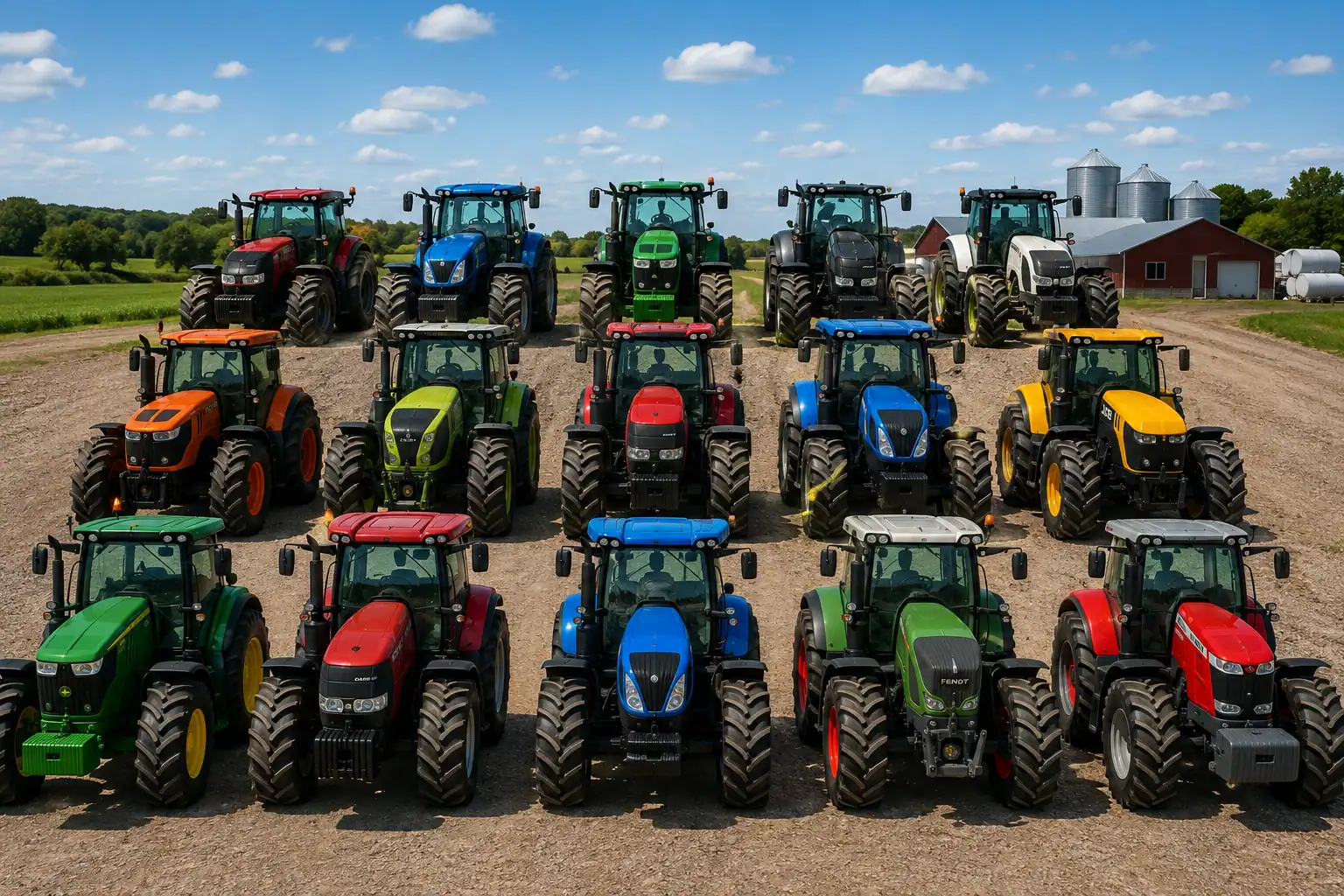
Heavy Equipment Resale Playbook: How Cleaning a Tractor Adds Trade-In Value
Cleaning Products
Heavy Equipment Resale Playbook: How Cleaning a Tractor Adds Trade-In Value
What You’ll Learn
- Protect Systems’ cleaning, polishing, and ceramic products protect the condition of your equipment. This is the one resale factor for tractors and heavy equipment you can still change, because make, model year, hours, and configuration all lock in years earlier.
- Machinery Pete auction records, compiled across nearly 30 years of North American sales, show that used equipment in nice condition pulls premium prices while same-vintage machines in average condition lose value.
- Online buyers judge a machine through photographs and an inspection report, so faded paint costs you money before anyone checks the hour meter. Cleaning tractors and heavy equipment you’re selling properly can have a huge impact on the value you get from them.
- Our suggested prep sequence for cleaning tractors and heavy equipment runs ProFoam six to eight weeks out, RUPES polishing four to six weeks out, and Protect Ceramic two to four weeks before the sale date.
Greg Peterson has recorded what used farm and construction equipment actually sells for across North America for more than three decades. He tracks real sale prices rather than asking prices, and he attaches the date and the location to every one of them. Under the Machinery Pete name, that archive became the number the industry checks before it trades.
One pattern in it should interest anyone who owns iron they will eventually sell. Peterson sums it up under a heading he titled “Condition Trumps All.” Gently aged equipment in nice condition keeps pulling premium prices at auction, while equipment of the same vintage in average or so-so shape has watched its values slide. After more than thirty years of data, he draws a direct conclusion about how you should resell heavy equipment, which is that taking great care of equipment pays, and it pays big.
Two machines can share a model, a year, and similar hours and still bring very different money.
What Sets the Number at Trade-In
Walk through what a buyer weighs. A buyer looks at make, model year, engine hours, configuration and options, service history, and condition.
The factory settled the first four items the day the machine rolled off the line, or the operator accumulated them slowly across years of work, and nobody changes them now. Agricultural economists reach the same place from the data side. One study of 847 used planter sales across 29 states named condition a primary driver of resale price, ranking it alongside make, age, and configuration rather than treating it as a minor adjustment.
That finding hands owners the whole argument for auction resale prep their used heavy equipment. Most of the price settled years ago, so condition is the piece still in play, and an owner controls it right up until the hammer falls.
Why Two Identical Machines Bring Different Money
Auction professionals watch this gap open on their own sale floors. DPA Auctions states it plainly, noting that two tractors carrying identical hours can differ by thousands based on appearance and records.
Buyers read paint. A faded hood and chalky fenders tell a bidder that somebody skipped things, and once a bidder starts counting what an owner skipped, that bidder does not stop at the paint. Hydraulics, bearings, and the transmission all draw suspicion the moment the exterior suggests neglect.
Market conditions sharpen this further. Machinery Pete has tracked a steep drop in late-model used inventory, and buyers chasing thin supply still save their strongest bids for clean, well-maintained tractors and heavy equipment. Scarcity lifts every price, but it does not close the gap between a sharp machine and a tired one.
Auction Firms Clean Equipment for a Reason
Look at what a national ag auction company actually sells to its consignors.
Sullivan Auctioneers runs no-reserve machinery auctions across ten states, and the firm lists cleaning and lining up their heavy equipment alongside professional photographs for its brochures and internet bidding catalog as core parts of its service. The company also cleans and rearranges the auction site itself so the machinery displays well.
A firm that lives on commission does not spend labor washing consignments out of tidiness. It washes them because clean tractors and heavy equipment bids higher during resale, and it keeps a percentage of whatever the hammer brings.
Does Online Bidding Change the Math?
Online bidding raises the stakes considerably for cleaning your heavy equipment properly for resale.
A large share of used equipment now sells to buyers who never laid a hand on it. Online platforms moved a great deal of bidding off the sale yard, so buyers evaluate a machine through photographs, a written description, and an inspection report. Appraisers attend sales for absent clients, walk the rows, assess the equipment, and photograph it. Inspection services evaluate general appearance alongside mechanical condition and document each unit across dozens of photographs.
Every one of those frames photographs your paint.
Presentation carries extra weight in an online sale for four specific reasons:
- Photographs flatten a machine’s strengths, so a mechanically excellent tractor with dull paint reads as an average one.
- Buyers cannot inspect in person, so they treat visible condition as a stand-in for the maintenance quality they cannot verify.
- Inspection reports cover general appearance right alongside the mechanical findings.
- Bidders scanning similar listings use appearance as their first filter before they read a single specification.
When You Sell Matters Too
Timing moves the number as well, and the research says something specific about it.
Auction analysis of used tractors found the largest premiums in January, February, and March, while April, June, September, and October produced the largest discounts. Auction operators describe the same rhythm from experience, noting that a combine sold in November brings a very different result than the same machine sold in August, and that planters draw peak interest in the first quarter.
Pair that with the prep argument and it points somewhere useful. The off-season gives an owner idle equipment, open shop time, and the strongest selling window of the year sitting directly ahead. A tractor or other agriculture equipment washed, cleaned, corrected, and coated over winter arrives exactly when the market pays best with the best resale value potential.
The Prep Timeline That Adds Value To Selling Heavy Equipment
A wash the week you sell your tractor or heavy equipment before the sale does not accomplish this, because paint correction takes hours and a ceramic coating needs time to cure.
Here is a heavy equipment cleaning schedule that works to maximize resale value, counting backward from the sale date:
- Six to eight weeks out, wash the machine completely with ProFoam or T&T Cleaner 2.0, covering interiors, undercarriage, and radiator cores, because nobody corrects paint on a dirty machine.
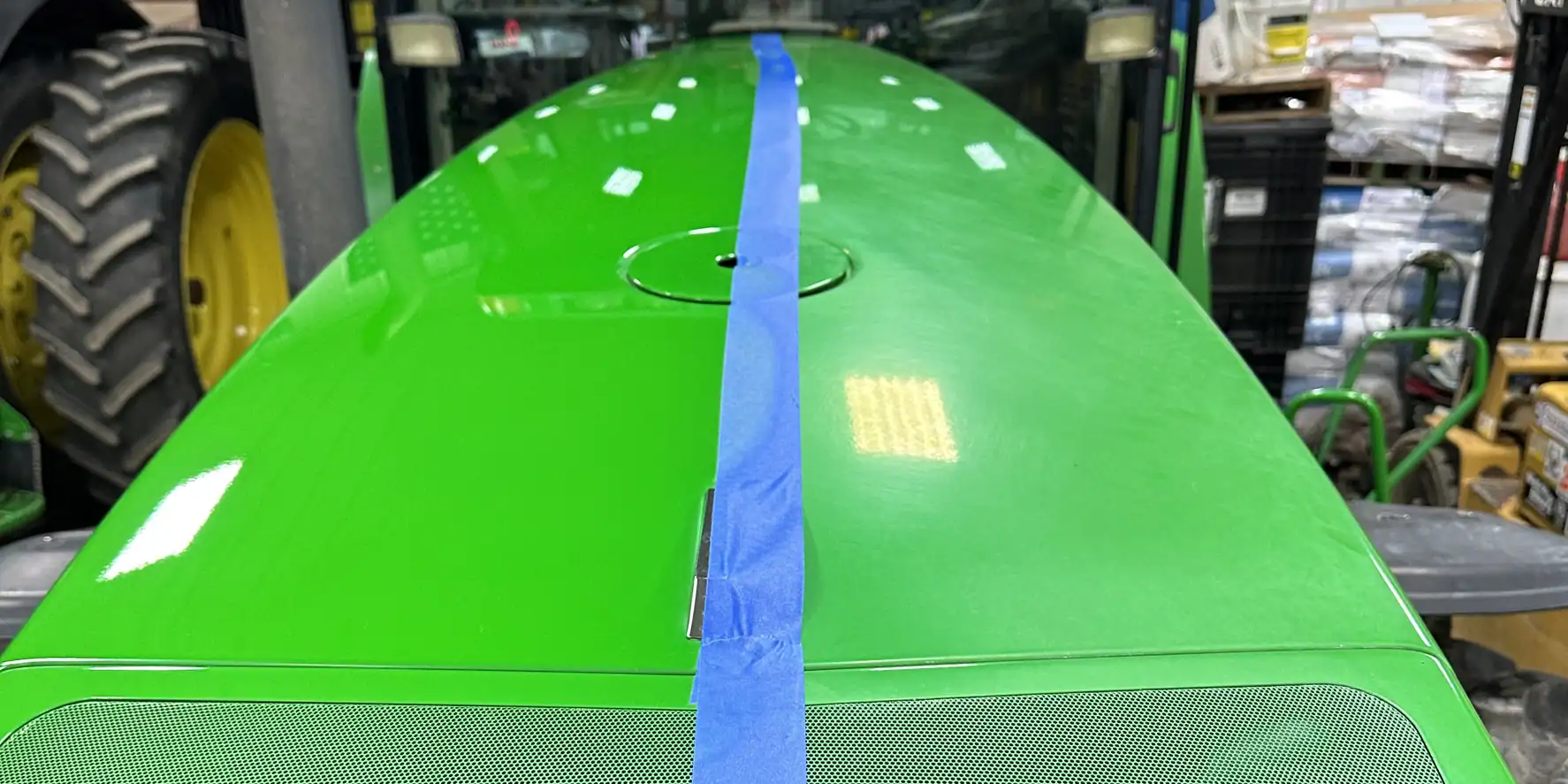
- Four to six weeks out, correct the paint with the RUPES polishing system to remove oxidation and restore color depth across the panels a photographer shoots first.
- Two to four weeks out, apply Protect Ceramic to seal the corrected surface so the finish survives transport, yard time, and the sale itself.
- One to two weeks out, treat faded plastic and rubber with Tire & Trim, clear the cab glass with Glass Pro +, and shoot your photographs in good light.
- During sale week, run Ceramic Rinse through a Pro Foamer for a fast refresh after hauling, and pull the service records together.
Follow that order every time, because you have to clean before you correct and correct before you coat.
Dealers and Fleets Flip the Equation
One operator selling one tractor runs a project, while a dealer or fleet manager runs a process, and the economics shift accordingly.
Equipment dealers already apply Protect Ceramic across inventory headed for the lot. Reconditioning cost per unit stays predictable, and it buys presentation on a lot where every machine competes for the same walk-up attention. Machinery Pete makes the dealer side concrete, pointing out that a well-maintained and cleaned trade-in heavy equipment moves off the lot immediately.
There is a smarter version of the same move. Coat the machines when you buy it rather than when you sell it, and the coating spends the whole ownership period blocking the UV exposure that fades paint in the first place. Prep at the end recovers resale value for tractors and heavy equipment, while protection at the start preserves it, and preserving costs less.
Frequently Asked Questions About Heavy Equipment Resale Value
How much does cleaning and paint correction add to a heavy equipment sale price?
No published figure covers every machine, and you should treat any specific percentage with suspicion. The evidence supports something clearer than a number. Auction data across nearly three decades shows nice-condition equipment earning premiums while average-condition equipment of the same vintage loses ground, and auction professionals report tractors with identical hours separating by thousands on cleaning, appearance and records.
Should I coat a machine I plan to sell within a year?
Judge the paint first. On a machine with a sound finish, a coating protects it through the sale window and photographs well. On heavily oxidized paint, you have to correct before you coat, so weigh that combined cost against what the machine will bring.
Does auction prep matter for construction equipment?
Yes, it matters just as much as agriculture equipment and tractors. Excavators, skid steers, wheel loaders, dozers, and other heavy equipment sell through the same online platforms, face the same photograph-driven evaluation, and carry the same condition scoring on their inspection reports that impacts their resale value.
When should I sell used tractors and heavy equipment?
Auction analysis of used tractors found the strongest premiums in January, February, and March, and the softest results in April, June, September, and October. Category shifts the pattern somewhat, since planters peak in the first quarter. Plan your timing alongside your preparation rather than separately from it.
Should I prep equipment myself or hire it out?
Either approach works. Operations with shop space and off-season hours handle it in-house, and Protect Systems designs the products for exactly that. Dealers and larger fleets usually fold the work into a reconditioning process. Available labor during the idle window decides which route makes sense.
Protect the Value You Already Paid For
Ready to prepare your agricultural and heavy equipment for maximum resale value to its next owner? Shop the complete Protect Systems product line, review cleaning products and polishing systems, browse the Protect Ceramic range, or locate a dealer near you.


CLEAN. POLISH. PROTECT.
Professional products for agricultural and heavy equipment maintenance.
Shop Products
FIND A DEALER NEAR YOU
Connect with a Protect Systems dealer in your area.
Find A Dealer
Ready To Restore Your Equipment?
Protect Systems provides professional cleaning products, polishing systems, and ceramic coatings designed specifically for agricultural and heavy equipment.

No Comments